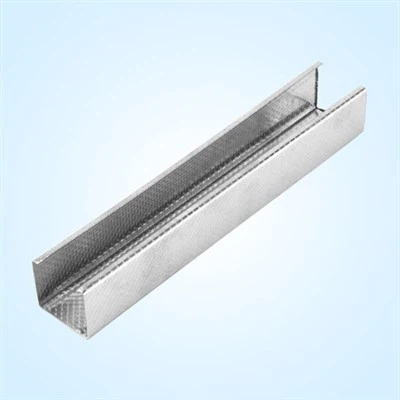
Manufacturing tolerances for cold-formed steel studs are crucial aspects that directly impact the quality, performance, and compatibility of these construction materials. As a supplier of cold-formed steel studs, I understand the significance of adhering to precise tolerances to meet the diverse needs of our customers in the construction industry.
Understanding Cold - Formed Steel Studs
Cold-formed steel studs are widely used in modern construction due to their numerous advantages, such as high strength - to - weight ratio, dimensional stability, and resistance to corrosion. They are typically made from thin sheets of steel that are formed into various shapes, including the popular C Type Stud and U Track Channel. These studs are commonly employed in non - load - bearing and load - bearing walls, partitions, and framing systems.
Key Manufacturing Tolerances
Dimensional Tolerances
-
Width and Depth
The width and depth of cold - formed steel studs are critical dimensions that must be within specific tolerances. For example, in a standard C - type stud, the width tolerance might be set at ±0.03 inches (±0.76 mm). This ensures that the studs fit accurately into the framing system, allowing for proper installation and alignment. If the width is too large, it may not fit into the designated space, while a width that is too small can lead to gaps and instability in the structure.
The depth of the stud also has strict tolerances. A deviation in depth can affect the overall strength and load - bearing capacity of the wall or framing. For instance, if the depth of a load - bearing stud is less than the specified tolerance, it may not be able to support the intended loads, which could compromise the safety of the building. -
Length
Length tolerances are equally important. In most cases, the length tolerance for cold - formed steel studs is around ±0.125 inches (±3.175 mm). This is essential for ensuring that the studs can be installed without excessive cutting or modification on the construction site. Precise length tolerances also contribute to the overall aesthetic appeal of the finished structure, as it allows for a more uniform and professional appearance. -
Thickness
The thickness of the steel used in cold - formed steel studs is a critical factor in determining their strength and durability. Manufacturing tolerances for thickness are typically very tight, often within ±0.002 inches (±0.05 mm). A deviation in thickness can significantly affect the stud's ability to resist bending, buckling, and other forms of structural stress. For example, a stud with a thickness below the specified tolerance may be more prone to failure under heavy loads.
Geometric Tolerances
-
Straightness
Cold - formed steel studs must be straight within a certain tolerance to ensure proper installation and alignment. The straightness tolerance is usually defined as a maximum deviation of 0.01 inches per foot (0.83 mm per meter) of length. Any significant curvature or bowing in the stud can cause problems during installation, such as difficulty in fitting the stud into the framing or creating uneven surfaces in the wall. -
Flatness
The flatness of the surfaces of the studs is also important. A flatness tolerance of ±0.01 inches (±0.254 mm) is commonly specified. This ensures that the studs can be easily attached to other components, such as drywall or sheathing, without any gaps or irregularities. Poor flatness can lead to issues with the finish of the wall and may also affect the effectiveness of any insulation or sound - proofing materials installed on the studs. -
Angle Tolerances
For studs with angled sections, such as those used in corner framing, angle tolerances are crucial. The angle tolerance is typically set at ±1 degree. This ensures that the studs form the correct angles in the framing system, allowing for proper load distribution and structural integrity. Incorrect angles can cause stress concentrations in the structure, which may lead to premature failure.
Surface Finish Tolerances
- Galvanization Coating
Many cold - formed steel studs are galvanized to protect them from corrosion. The thickness of the galvanization coating has specific tolerances. For example, the minimum coating thickness might be specified at 0.0015 inches (0.038 mm), with a maximum tolerance of ±0.0002 inches (±0.005 mm). A coating that is too thin may not provide adequate protection against rust and corrosion, while a coating that is too thick can affect the stud's ability to be painted or finished properly. - Surface Smoothness
The surface smoothness of the studs is also regulated. A smooth surface is important for several reasons. It allows for better adhesion of any finishes or coatings applied to the studs, such as paint or drywall adhesive. Additionally, a smooth surface reduces the risk of injury during handling and installation. Surface roughness tolerances are typically specified in terms of micro - inches or micrometers, ensuring a consistent and high - quality finish.
Impact of Tolerances on Quality and Performance
Maintaining strict manufacturing tolerances directly affects the quality and performance of cold - formed steel studs. When studs are produced within the specified tolerances, they offer better structural integrity, improved compatibility with other construction materials, and easier installation. This, in turn, leads to a more reliable and durable building structure.
On the other hand, if the manufacturing tolerances are not met, it can result in a range of problems. Inaccurate dimensions can lead to installation difficulties, which can increase labor costs and project timelines. Poorly manufactured studs may also compromise the safety and performance of the building, leading to potential structural failures or costly repairs in the future.
Our Commitment as a Supplier
As a supplier of cold - formed steel studs, we are committed to maintaining the highest standards of manufacturing tolerances. We use state - of - the - art manufacturing equipment and quality control processes to ensure that every stud we produce meets or exceeds the industry standards. Our in - house quality control team conducts regular inspections and tests to verify the dimensions, geometric properties, and surface finish of the studs.
We also understand that different construction projects may have unique requirements. That's why we offer customization options for our cold - formed steel studs, allowing us to meet the specific tolerances and specifications of our customers. Whether it's a small residential project or a large commercial building, we have the expertise and resources to provide high - quality studs that are tailored to your needs.
Why Choose Our Cold - Formed Steel Studs
- Precision Manufacturing
Our studs are manufactured with extreme precision, ensuring that they meet the strictest tolerances. This means that you can expect a perfect fit and reliable performance on your construction site. - High - Quality Materials
We use only the finest quality steel in our manufacturing process. This not only ensures the strength and durability of our studs but also contributes to their long - term resistance to corrosion and other environmental factors. - Customization
We understand that every construction project is unique. That's why we offer customization services, allowing you to specify the exact dimensions, thickness, and other properties of the studs you need. - Exceptional Customer Service
Our team of experts is always available to provide you with technical support and advice. Whether you have questions about the manufacturing tolerances, installation procedures, or any other aspect of our cold - formed steel studs, we are here to help.
Contact Us for Your Cold - Formed Steel Stud Needs
If you are in the market for high - quality cold - formed steel studs, we invite you to contact us for a consultation. Our experienced sales team can provide you with detailed information about our products, pricing, and delivery options. We are eager to work with you to ensure that your construction project is a success. Whether you are a contractor, builder, or architect, we have the solutions you need to meet your cold - formed steel stud requirements.


References
- American Iron and Steel Institute (AISI). Cold - Formed Steel Design Manual.
- International Building Code (IBC). Building Code Requirements for Cold - Formed Steel Structural Framing.
- ASTM International. Standards for Cold - Formed Steel Structural Members.