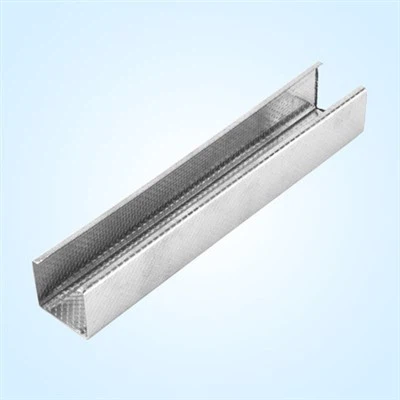
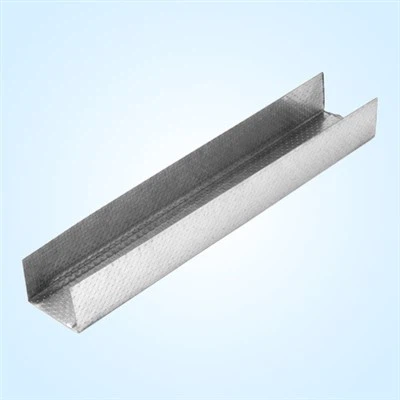
Both aluminum alloy keel and galvanized keel are commonly used supporting materials in ceiling and partition wall systems, each with its own unique characteristics and advantages. The following are their differences in materials, performance, application environment, and cost:
1. Material Differences
Aluminum Alloy Keel: Aluminum alloy keel is made of aluminum alloy, which is lightweight, has high strength, and good corrosion resistance. Aluminum alloy itself has high oxidation resistance, maintaining good durability even in humid or salt spray environments.
Galvanized Keel: Galvanized keel uses steel as the base material, with a galvanized surface to prevent rust. The galvanized layer provides some corrosion protection, but compared to aluminum alloy, galvanized keel has slightly lower corrosion resistance in extreme environments.
2. Corrosion Resistance and Applicable Environment
Aluminum Alloy Keel: Due to its strong oxidation resistance, aluminum alloy maintains good performance even when exposed to humid or corrosive environments for extended periods. Especially suitable for marine climates or high-humidity environments, such as kitchens, bathrooms, and basements, offering superior corrosion resistance.
Galvanized Keel: Galvanized keel also has good corrosion resistance, but this relies primarily on the protective effect of the zinc coating. Over time, the zinc coating may gradually corrode, especially in humid or highly acidic environments, where galvanized keel may lose some of its anti-corrosion properties. Therefore, the applicable environments for galvanized keel are slightly more limited than those for aluminum alloy keel.
3. Weight and Strength
Aluminum Alloy Keel: Aluminum alloy keel is lightweight, suitable for projects requiring reduced building load. Although aluminum alloy is lighter than steel, its high strength allows it to withstand greater loads without easily deforming. Suitable for projects with high requirements for lightweight, corrosion resistance, and aesthetics.
Galvanized Keel: Galvanized keel is generally slightly heavier than aluminum alloy keel, but due to the robustness of its steel matrix, it has a strong load-bearing capacity, making it suitable for building structures with high strength requirements.
4. Cost
Aluminum Alloy Keel: Due to the higher production cost of aluminum alloy materials, aluminum alloy keels are generally more expensive. Therefore, aluminum alloy keels are more suitable for high-end construction projects with high requirements for quality and aesthetics.
Galvanized Keel: Galvanized keels are relatively inexpensive and more economical. Due to their price advantage, galvanized keels are often used in mid-to-low-end construction projects, suitable for construction environments with limited budgets.
5. Aesthetics
Aluminum Alloy Keel: Aluminum alloy keels have excellent surface treatment effects. Higher decorative effects can be achieved through anodizing or spraying techniques, resulting in a smoother surface and superior aesthetics compared to galvanized keels.
Galvanized Keel: Galvanized keel surfaces are usually silver-white. Although galvanizing provides protection, its appearance is not as refined as aluminum alloy keels, especially in places where high aesthetic standards are required, where aluminum alloy keels may be less appealing.
6. Installation and Maintenance
Aluminum Alloy Keel: Aluminum alloy keels are easier to process and install, less susceptible to external environmental influences, have a long service life, and require less maintenance. Galvanized keel: The installation process for galvanized keel is similar to that of aluminum alloy keel, but special attention is needed for proper maintenance and inspection in high-humidity environments to prevent corrosion of the galvanized layer.
Summary
Aluminum alloy keel: Suitable for construction projects with high requirements for aesthetics, corrosion resistance, and durability, especially excelling in humid environments and high-end decorative projects.
Galvanized keel: Lower cost, suitable for ordinary construction projects, particularly in locations with high strength requirements and relatively dry environments.
The decision to use aluminum alloy keel or galvanized keel should be made based on the specific needs of the project, budget, environmental conditions, and aesthetic requirements.