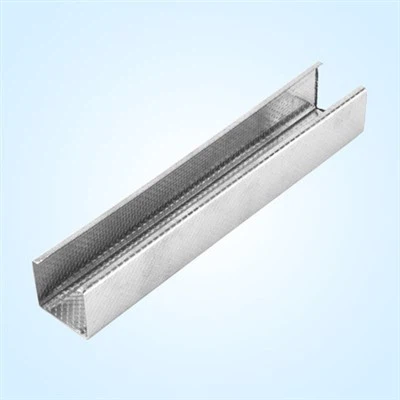
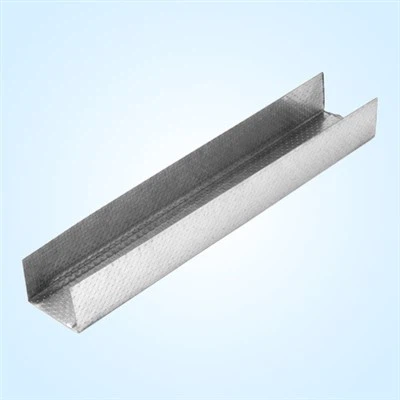
In the world of drywall construction, the galvanized steel stud framework is the most common method for creating interior partitions. Within this framework, two primary components play distinct but complementary roles: the C Type Stud and the U Track Channel. Understanding the difference between these two is vital for structural stability. The U Track Channel is essentially the "rail" of the system. It is installed horizontally on the floor and the ceiling to define the path and thickness of the wall. Because it serves as a guide, it is typically slightly wider than the stud that fits into it. On the other hand, the C Type Stud is the vertical component. Its "C" shape, which includes folded-in edges or "flanges," provides the vertical strength required to carry the load of the gypsum board. These flanges also provide a wider surface area for screws to bite into during the boarding process.
The manufacturing process for both components involves cold-rolling galvanized steel strips. The thickness of the steel, often referred to as the gauge, determines the height a wall can reach without extra bracing. For a standard partition, a C Type Stud is slotted into the bottom U Track and then the top U Track. One of the key advantages of using a galvanized steel stud over wood is the precision of the dimensions; every piece is perfectly straight, which ensures a flat wall surface. When a project involves suspended ceilings, a similar logic is applied using the ceiling stud and click type ceiling stud to create a grid. In industrial applications, where sound or heat insulation is required, the space between the vertical C Type Studs is often filled with industrial rock wool or rock wool board. This combination not only provides a solid wall but also excellent acoustic properties. Furthermore, if the partition is intended for a bathroom or a laundry room, the standard plaster board is replaced with water resistance plaster board or moisture resistance plaster board to prevent the steel from being exposed to dampness. The choice of C Type Stud also depends on the required wall thickness, with common sizes ranging from 50mm to 150mm. By correctly matching the C Type Stud with its corresponding U Track Channel, builders can create a high-performance partition that is lightweight, fire-resistant, and easy to modify in the future.